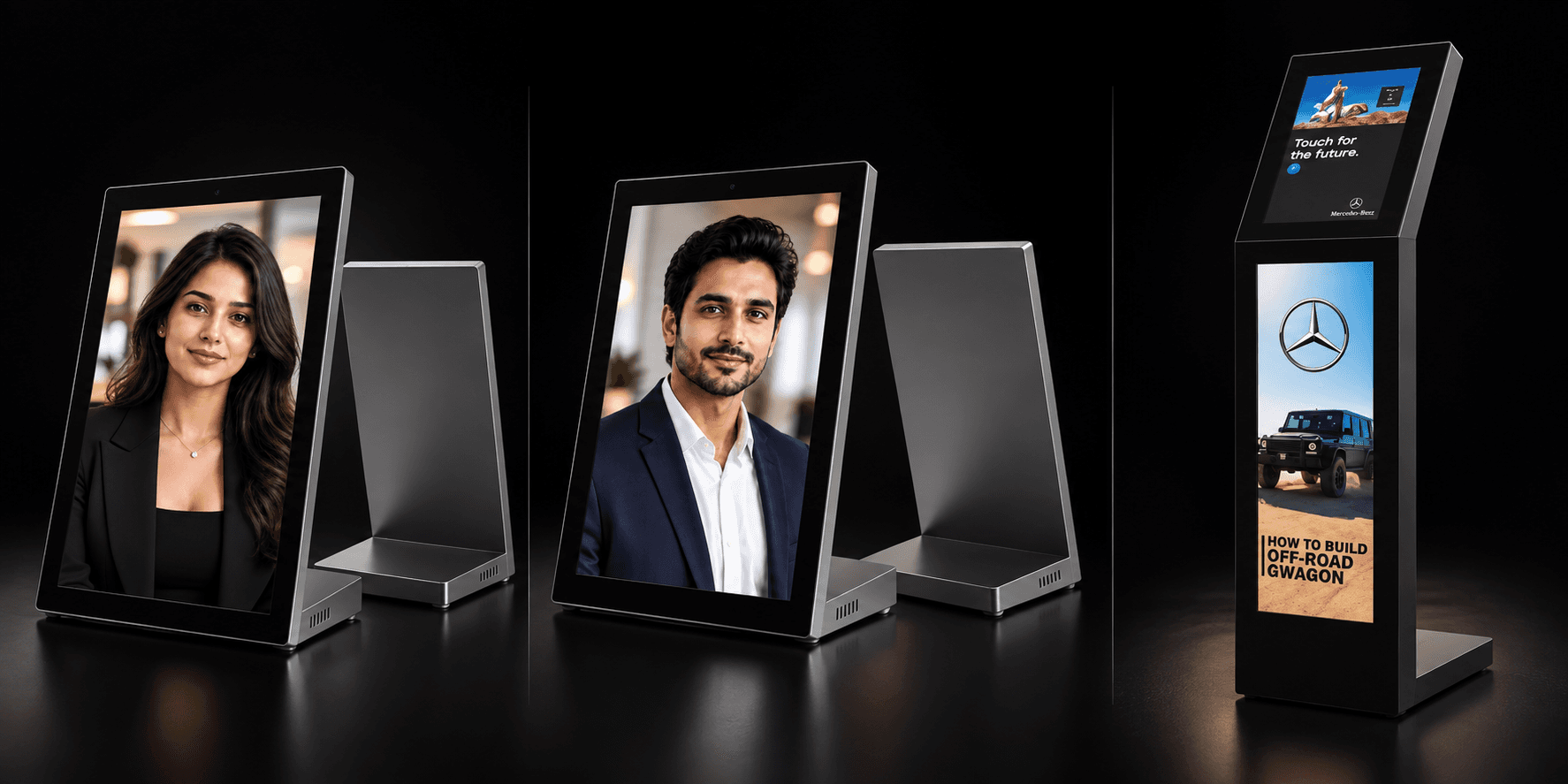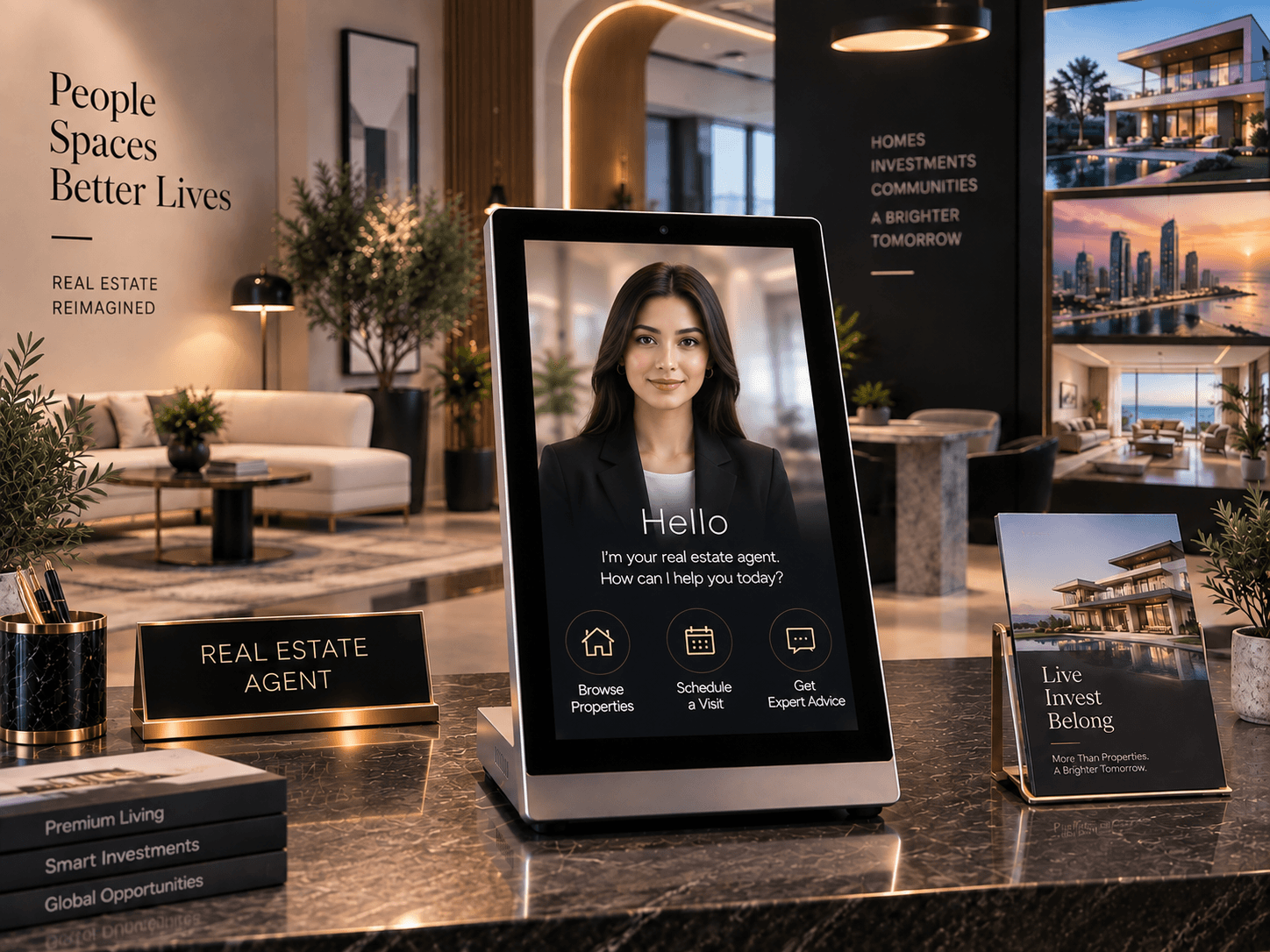
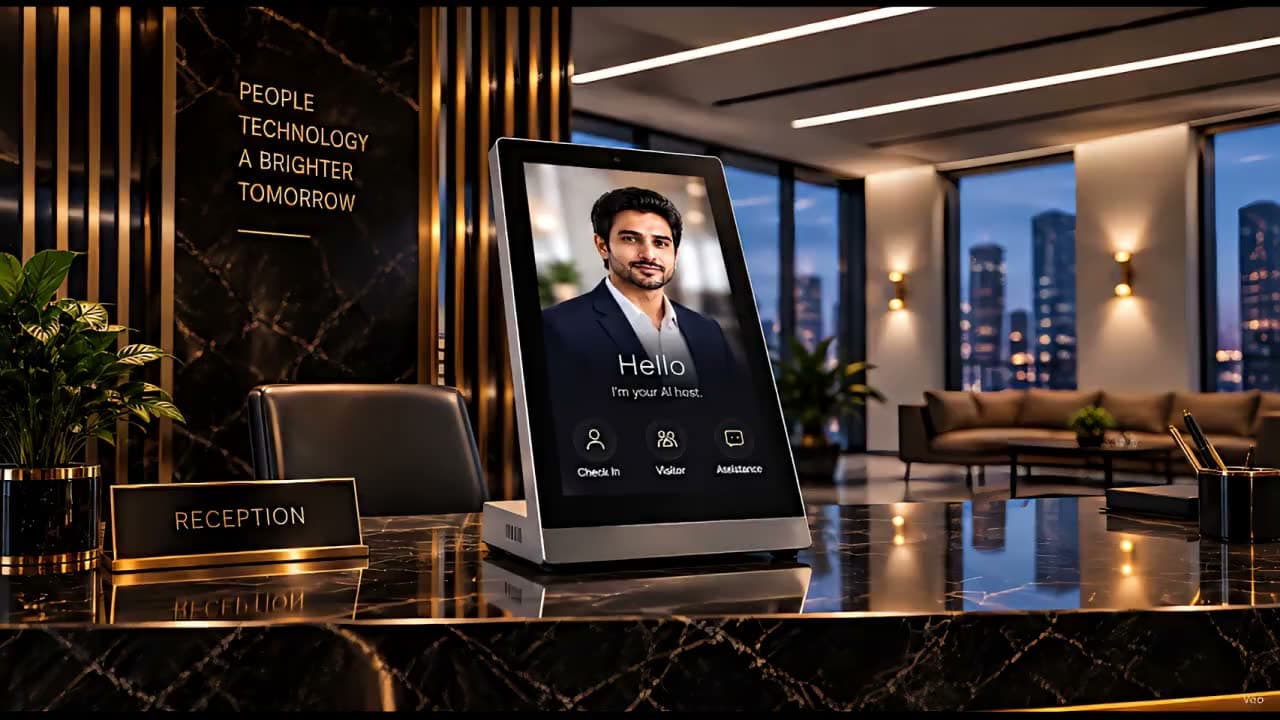
يغطي كشك الاستقبال الذكي جميع ساعات العمل دون استراحات أو مناوبات، ويجيب عن الأسئلة المتكررة بشكل ثابت بالعربية والإنجليزية. أما موظف الاستقبال فيتفوق في التقدير والتعاطف والطلبات المعقدة. الحل الأفضل لمعظم الشركات في الإمارات هو الجمع بينهما.
The short answer
This is not a contest with one winner. An AI kiosk and a human receptionist are good at different things. The useful question is which tasks each should do, and what that means for coverage and cost.
Coverage: hours, breaks and peaks
Labour rules shape how much of the day one person can cover. Under Article 17 of the UAE Labour Law, Federal Decree-Law No. 33 of 2021, normal working hours in the private sector are 8 hours a day or 48 hours a week, and they are reduced by 2 hours a day during Ramadan, as the UAE government portal explains. The law also requires breaks during the working day.
So a front desk open 12 hours a day, seven days a week, needs more than one person on a rota, plus cover for breaks, leave and sickness. A kiosk runs for the whole opening day. That is a plain consequence of the law, not a criticism of staff.
Peaks matter too. When ten visitors arrive at once, one receptionist serves them one by one. A kiosk will not serve ten at once either, but it can welcome and orient people while staff deal with the queue, and several kiosks can be placed around a large space.
Languages
A receptionist speaks the languages they speak. A bilingual digital human such as Memorix serves Arabic and English on the same screen. For international venues that is a real advantage; see Arabic and English AI digital humans.
Consistency
A kiosk gives the approved answer every time, on the first visitor of the day and the last. That helps where accuracy matters and answers change rarely: directions, opening hours, services, project facts. It is also a risk if the content is wrong, so someone must own and update it.
Where people are clearly better
- Reading emotion and calming an upset visitor.
- Making judgement calls and exceptions.
- Handling unusual or sensitive requests.
- Building relationships with repeat visitors and VIPs.
- Physical tasks: handing over keys, badges and documents.
An AI kiosk should be designed to recognise these moments and call a person.
Cost structure, not just cost
Comparing a monthly salary with a kiosk price is misleading, because the cost structures differ.
Human receptionist
Costs include salary and allowances set by your market and role, visa and onboarding costs, training, cover for leave and breaks, and management time. They scale with hours and locations: two shifts or two sites roughly means two people or more.
AI receptionist kiosk
Costs are typically the hardware, a software subscription and some content and setup time. They scale with the number of kiosks, not with opening hours: a kiosk costs the same whether the venue opens 8 or 14 hours.
The fair comparison is therefore cost per covered hour and per location, for the tasks the kiosk can actually do. Use your own salary and opening-hour figures rather than generic benchmarks. Request a Memorix quote to put real kiosk numbers next to yours.
A practical split of tasks
- Kiosk: first welcome, directions, opening hours, service information, frequently asked questions, collecting contact details, out-of-hours information.
- People: complex queries, complaints, payments, documents, VIP guests, sales conversations.
- Handover: the kiosk calls a person when the visitor asks or when the question is outside its scope.
Which kiosk for which role
- Replacing a busy "information" desk at an entrance: the Floor-Standing AI Host.
- Supporting a receptionist at a counter: the 13.3″ tabletop AI assistant.
- Covering events and pop-ups: the 15.6″ tabletop AI kiosk, which sets up on any counter with a power socket.
How to decide
- List the questions your front desk gets in a typical week.
- Mark which ones have a fixed, approved answer.
- Note the hours and languages you need to cover.
- Estimate the cost per covered hour today.
- Pilot one kiosk for a set period and compare.
Summary
An AI kiosk wins on coverage, consistency and bilingual service at a predictable cost; a human receptionist wins on judgement and empathy. Combine them so people spend their time where they matter. Read the complete guide to AI receptionist kiosks in Dubai or request a quote.