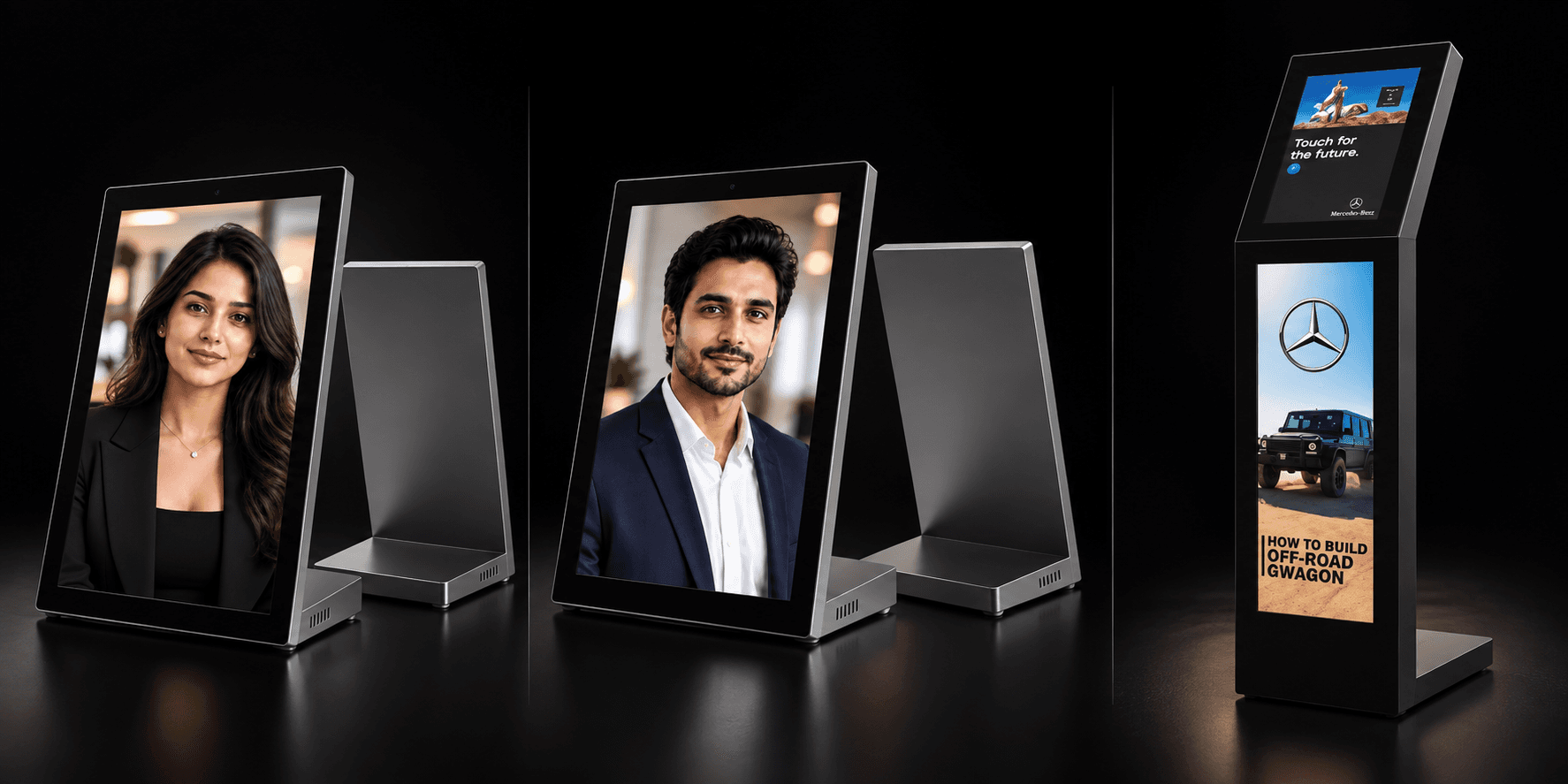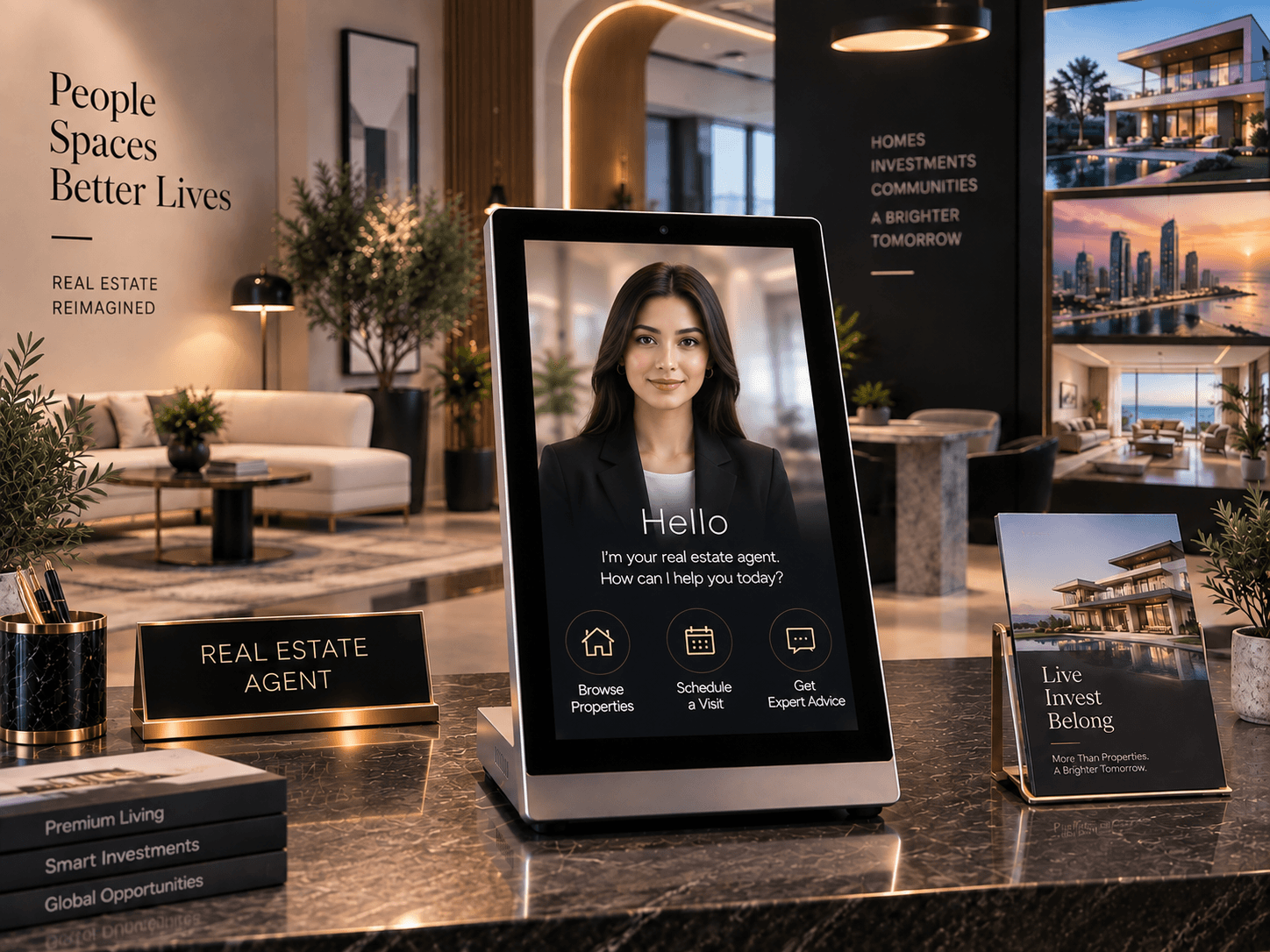
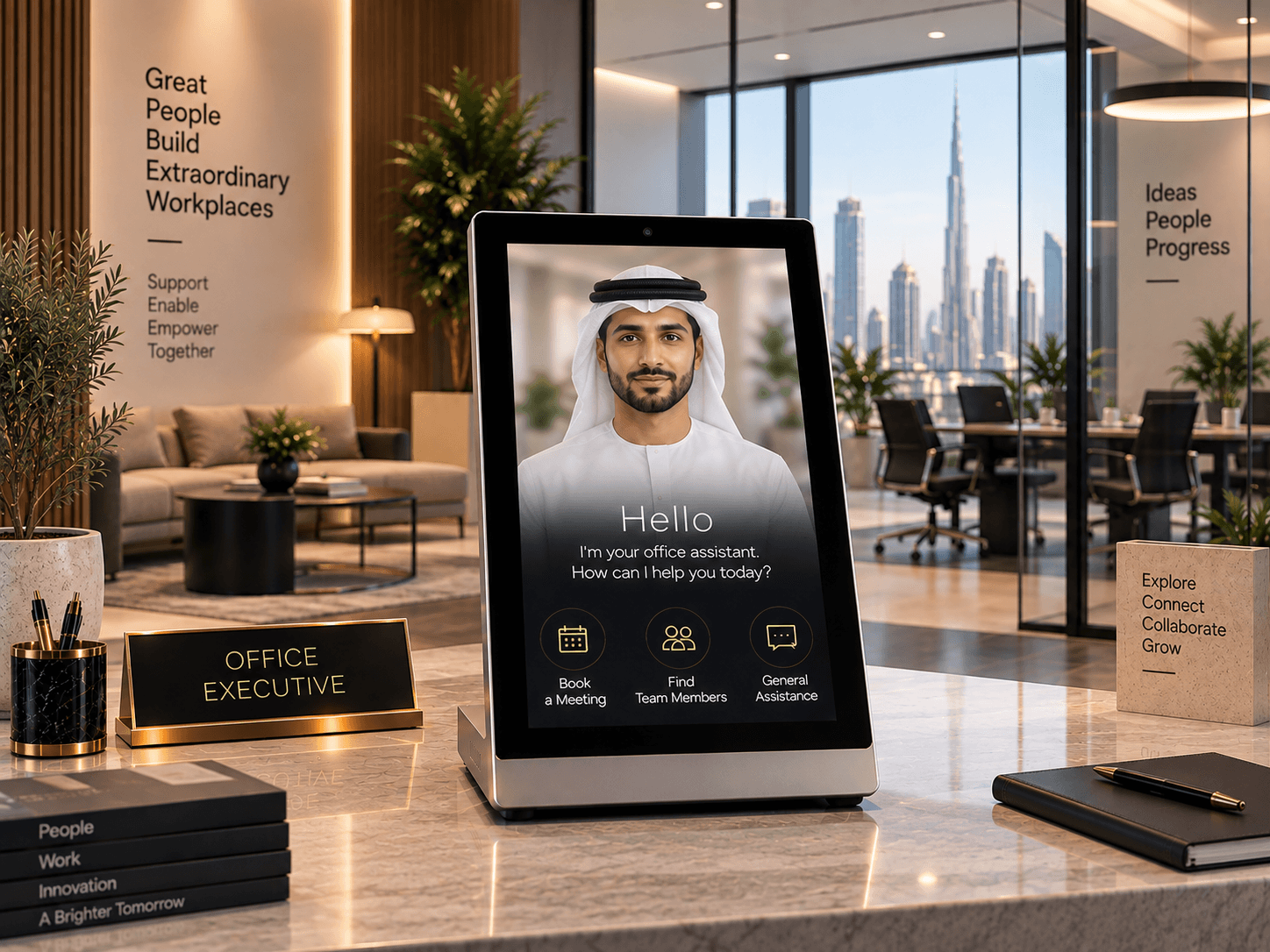
الإنسان الرقمي ثنائي اللغة يخدم الزوار بالعربية والإنجليزية على الكشك نفسه، وينتقل تلقائياً إلى لغة الزائر. في الإمارات، حيث العربية هي اللغة الرسمية والإنجليزية منتشرة في الأعمال، يُعد ذلك الحد الأدنى لخدمة العملاء. اختبروا الكشك مع متحدثين حقيقيين باللهجة الخليجية قبل الشراء.
Why bilingual service is the baseline in the UAE
Arabic is the official language of the UAE, and English is the everyday language of business for a large part of the population. A customer service point that only works in one of them leaves part of your visitors behind. For government entities and companies serving Emirati customers, strong Arabic is not optional; for hotels, malls and property developers serving international visitors, strong English is equally important.
The UAE's own AI strategy puts customer service at the centre: the UAE National Strategy for Artificial Intelligence 2031 includes adopting AI across customer services among its objectives, according to the UAE Cabinet.
What makes Arabic hard for AI
Arabic is not one spoken variety. Modern Standard Arabic is used in writing and formal speech, while daily conversation happens in dialects: Emirati and wider Gulf Arabic, Egyptian, Levantine and others, all common in the UAE. A digital human needs to:
- understand dialect speech, not only formal Arabic;
- handle code-switching, where a visitor mixes Arabic and English in one sentence;
- reply in a register that suits the setting: polite and clear, neither too formal nor too casual;
- pronounce names of places, projects and people correctly;
- render Arabic text right-to-left correctly on screen.
How a bilingual digital human works
A kiosk like Memorix combines speech recognition, an agentic AI that understands and decides, a text-to-speech voice and an animated avatar whose lip movements follow the speech. For bilingual service, each layer must handle both languages:
- Listening: the speech recognition detects the language, or the visitor chooses it on screen.
- Understanding: the AI maps the question to the right answer regardless of language, so content is managed once rather than twice.
- Speaking: the voice should sound natural in both languages, ideally the same persona.
- Showing: on-screen text, menus and buttons switch direction and language together.
Cultural fit matters as much as grammar
A digital human represents your brand in a public space. Greetings, forms of address, gestures and attire of the avatar should suit the setting and the audience. In the UAE that usually means a warm, respectful greeting, patience with questions and a clear offer to bring a person when needed. Review the persona with local team members, not only the vendor.
How to test an Arabic AI digital human before you buy
Run a structured test with your own people:
- Ask the same ten real customer questions in Gulf Arabic, in Modern Standard Arabic and in English.
- Mix languages within a sentence, as many visitors do.
- Test in realistic noise: a lobby, a mall, an event floor.
- Check names of your branches, projects and products.
- Check that the on-screen Arabic is right-to-left and correctly shaped.
- Ask something the AI should not answer and see whether it hands over gracefully.
- Time the response: long pauses break the conversation.
Where bilingual digital humans add the most value
- Government service centres: guiding visitors to the right service in their preferred language.
- Hotels: welcoming guests from many countries at check-in and concierge points.
- Real estate sales centres: explaining projects to local and international buyers; see AI hosts in UAE sales centres.
- Clinics and hospitals: wayfinding and reception questions.
- Retail and malls: product and store information.
Choosing the right kiosk format
For a bilingual welcome at an entrance, the Floor-Standing AI Host gives the digital human a 29″ screen above a 15.6″ touch display. For desks and counters, the 13.3″ tabletop AI assistant takes little space. For busier counters and sales desks, the 15.6″ tabletop AI kiosk has a larger screen.
Data and privacy in two languages
Notices about recording and data use should appear in both Arabic and English, and consent should be captured in the visitor's language. Processing must follow the UAE's personal data protection law. See sovereign AI in the UAE for the hosting questions to ask.
Summary
In the UAE, a customer service digital human must be genuinely bilingual: it should understand Gulf Arabic and English, handle mixed speech, speak naturally and show Arabic correctly. Test it with your own team in realistic conditions. Memorix is built in Dubai for exactly this setting. Request a quote or read the complete guide to AI receptionist kiosks in Dubai.